
The Science of Sleep: Sleep Physiology Explained for the Athlete
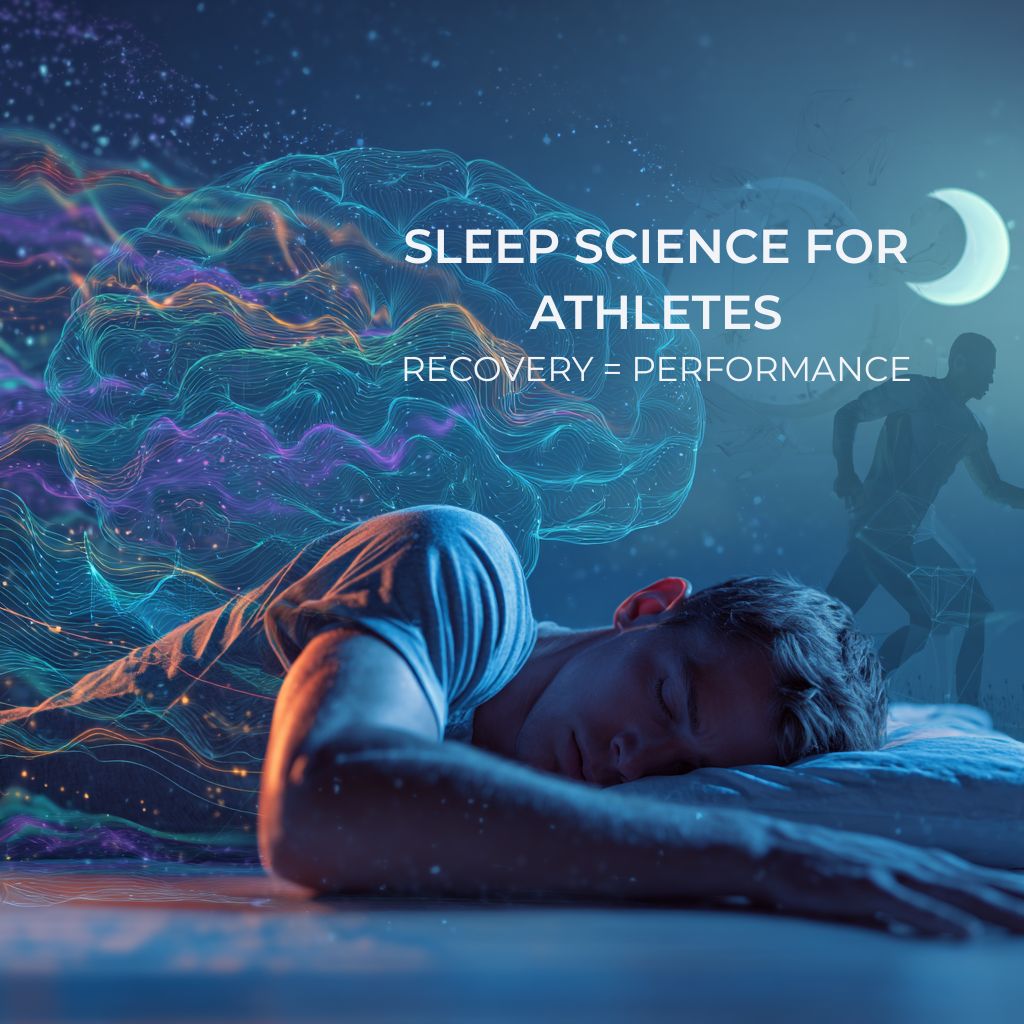
The Science of Sleep: Sleep Physiology Explained for the Athlete
How Lack of Sleep Quietly Sabotages Your Strength, Speed, and Recovery
Any athlete knows recovery is essential for performance—but not all recovery strategies are created equal. One tool every athlete shares, though, is sleep.
While the average adult gets around 7–8 hours per night, research suggests elite athletes actually need closer to 8+ hours of sleep to optimize athletic performance and recovery. The problem? Many only get about 6–7 hours on average.
That gap matters.
Sleep isn’t just “rest”—it’s when your body repairs muscle, regulates hormones, and enhances cognitive processes critical for motor coordination and performance. Understanding the science of sleep for athletes can give you a real competitive edge.
Understanding Sleep Cycles for Athletic Performance and Recovery
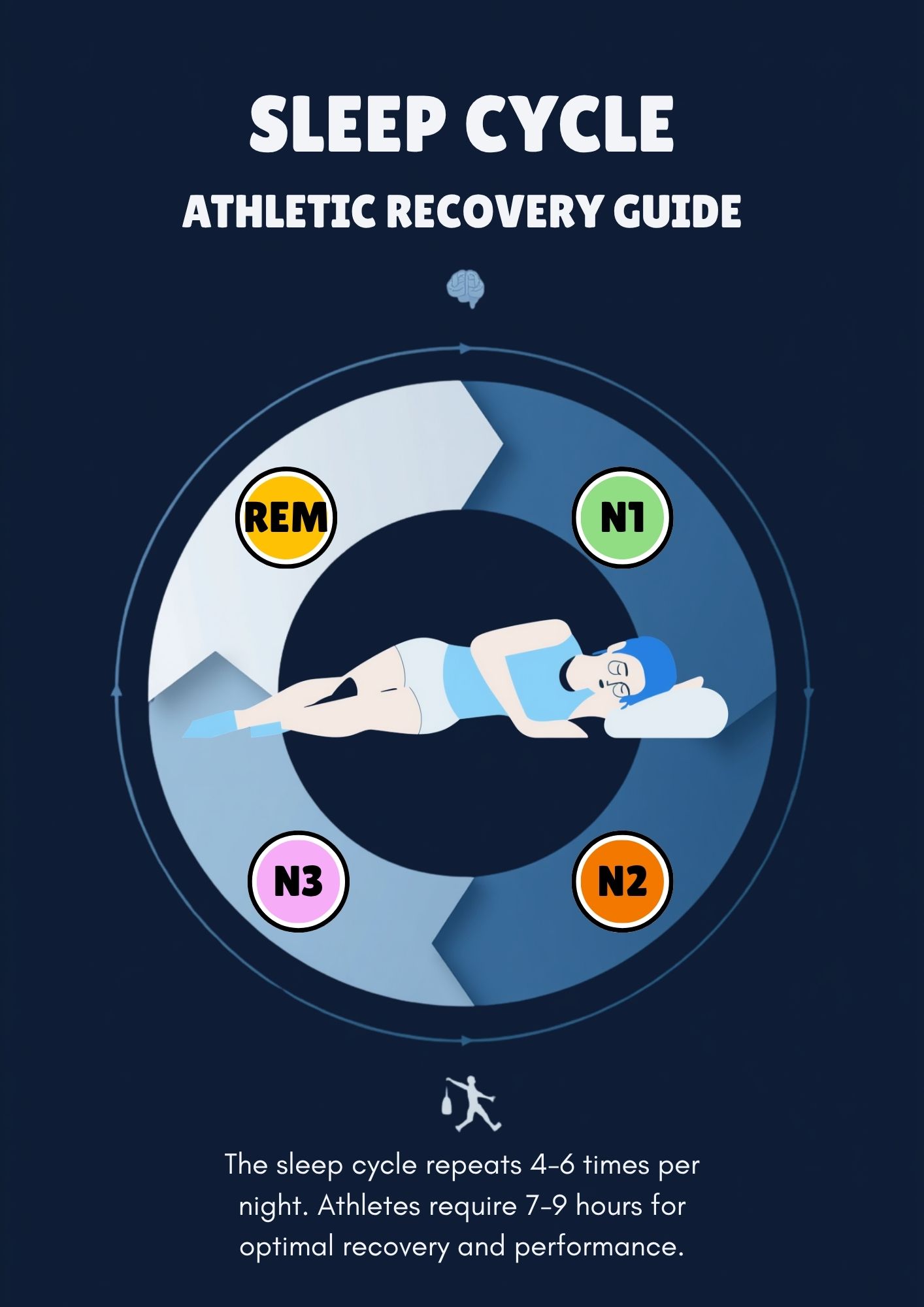
Sleep is made up of repeating cycles (4–6 per night), each lasting about 90 minutes. These cycles include:
- REM (Rapid Eye Movement) sleep
- NREM (Non-Rapid Eye Movement) sleep: stages N1, N2, and N3
Understanding these sleep cycles is key to improving sports performance and recovery.
REM Sleep: Brain Recovery and Skill Development
REM sleep plays a major role in:
- Memory consolidation
- Skill acquisition
- Tactical learning and decision-making
For athletes, REM sleep strengthens neural pathways tied to training, helping translate practice into performance. In other words, this stage helps you learn faster and perform smarter.
NREM Sleep: Physical Recovery and Muscle Growth
Stage N1 (Light Sleep):
The transition from wakefulness to sleep.
Stage N2 (Motor Memory Stage):
Critical for motor skill learning and retention. This stage helps solidify movement patterns and techniques practiced during training.
Stage N3 (Deep Sleep):
This is the most important stage for muscle recovery and physical restoration:
- Increased growth hormone secretion
- Enhanced protein synthesis
- Accelerated muscle repair and tissue regeneration
Lack of deep sleep can impair recovery, increase inflammation, and reduce overall athletic output.
What Controls Sleep? The Role of Hormones and Neurotransmitters
Sleep is regulated by a balance of hormones and brain chemicals:
- GABA promotes relaxation and sleep onset
- Melatonin regulates your sleep-wake cycle (circadian rhythm)
- Dopamine, serotonin, norepinephrine, and acetylcholine promote wakefulness
This delicate balance is essential for maintaining high-quality sleep for athletes, especially during intense training periods.
Effects of Sleep Deprivation on Athletic Performance
Sleep deprivation has been consistently shown to impair physical performance, endurance, and recovery.
Physiological Effects of Sleep Loss:
- Increased heart rate
- Elevated breathing rate and effort
- Higher lactate accumulation
- Greater physiological strain
These changes lead to:
- Earlier fatigue
- Reduced VO₂ max and endurance performance
Performance and Recovery Impairments:
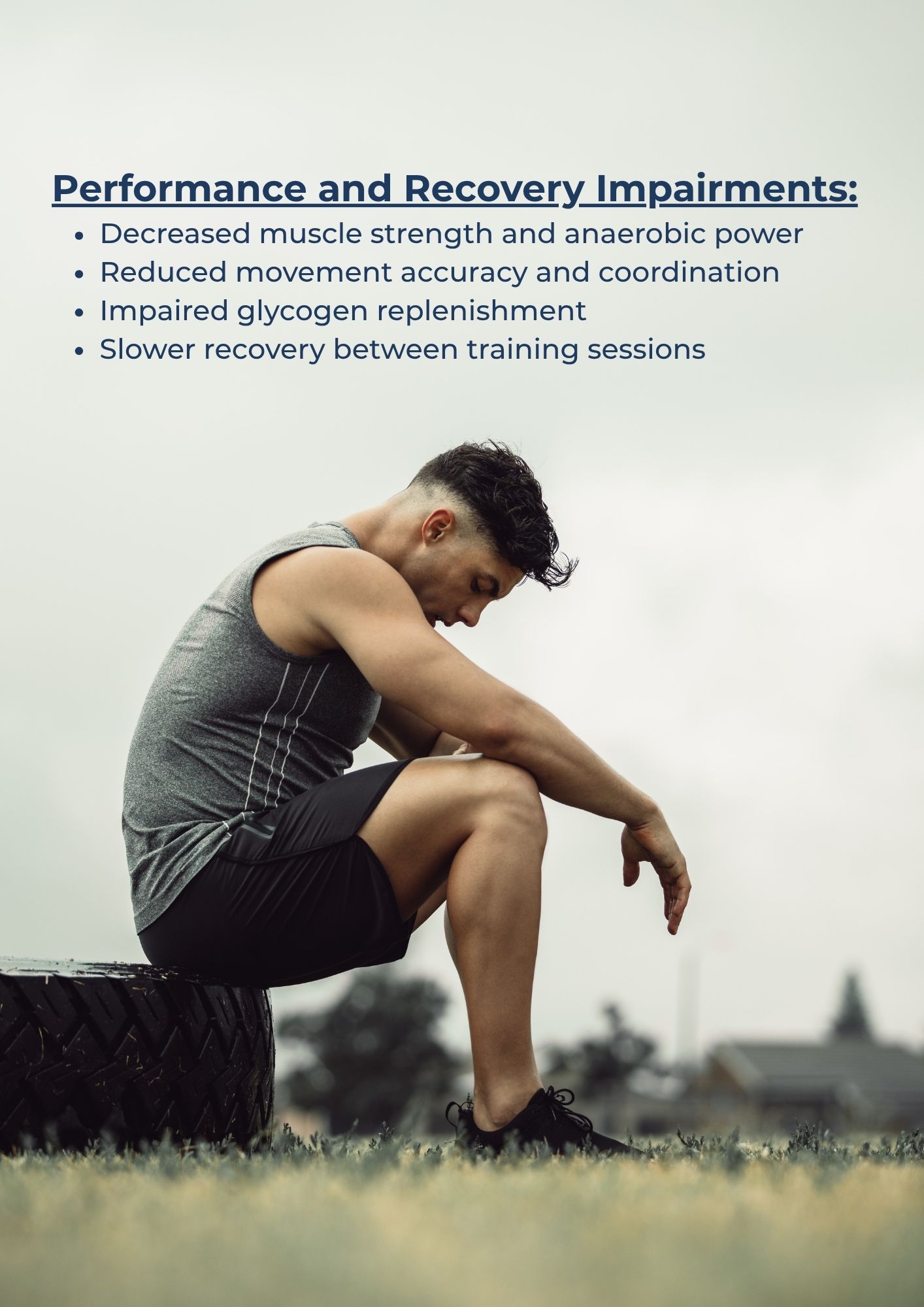
Chronic sleep deprivation can even mimic overtraining syndrome, limiting adaptation and increasing injury risk.
Sleep Deprivation, Recovery, and Supplementation
Research suggests that sleep deprivation combined with intense exercise can negatively affect cellular recovery pathways. Some studies indicate that L-arginine supplementation may help support recovery by improving blood flow and reducing oxidative stress.
However, no supplement replaces the most powerful recovery tool available: adequate, high-quality sleep.
Takeaway: Why Sleep Is Critical for Athletes
If you want to maximize sports performance, muscle recovery, and endurance, sleep must be a priority.
Benefits of Optimal Sleep for Athletes:
- Enhanced muscle repair and growth
- Improved motor skill learning and memory
- Faster recovery and adaptation
- Better reaction time and decision-making
The Bottom Line:
You can’t out-train poor sleep.
References
Sargent C, Lastella M, Halson SL, Roach GD. How Much Sleep Does an Elite Athlete Need? Int J Sports Physiol Perform. 2021 Dec 1;16(12):1746-1757. doi: 10.1123/ijspp.2020-0896. Epub 2021 May 21. PMID: 34021090.
Wang, Z.; Fei, X.; Liu, X.; Wang, Y.; Hu, Y.; Peng, W.; Wang, Y.-W.; Zhang, S.; Xu, M. REM sleep is associated with distinct global cortical dynamics and controlled by occipital cortex. Nat. Commun. 2022, 13, 6896.
Leach, S.; Krugliakova, E.; Sousouri, G.; Snipes, S.; Skorucak, J.; Schühle, S.; Müller, M.; Ferster, M.L.; Da Poian, G.; Karlen, W.; et al. Acoustically evoked K-complexes together with sleep spindles boost verbal declarative memory consolidation in healthy adults. Sci. Rep. 2024, 14, 19184.
Zielinski, M.R.; McKenna, J.T.; McCarley, R.W. Functions and Mechanisms of Sleep. AIMS Neurosci. 2016, 3, 67–104.
Kamareh, M.N.; Samadi, M.; Arabzadeh, E.; Abdollahi, M.; Sheidaei, S.; Malayeri, S.R.; Schlicht, J.; Shirvani, H.; Rostamkhani, F. The effect of 24-hour sleep deprivation and anaerobic exercise on the expression of BAX, BCL2, BMAL1 and CCAR2 genes in peripheral blood mononuclear cells after L-arginine supplementation. Gene 2023, 887, 147732.
Ortiz, L.M.; Lombardi, P.; Tillhon, M.; Scovassi, A.I. Berberine, an epiphany against cancer. Molecules 2014, 19, 12349–12367.